


 4.4
4.4 My daily life is filled with moments where Wikipedia becomes my go-to app. Whether I’m researching for a work project, looking up a quick fact during a conversation, or simply indulging my curiosity about a random topic, Wikipedia is always at my fingertips. For example, during a recent dinner party, a debate sparked about the origins of a popular saying. Instead of letting the discussion fizzle out, I quickly pulled out my phone, opened the Wikipedia app, and found the article on the phrase’s history. The instant access to reliable information not only settled the debate but also made me the star of the evening!
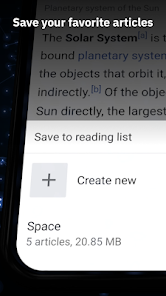
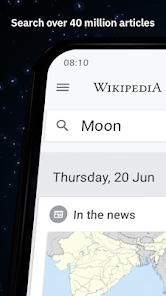
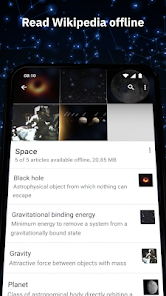
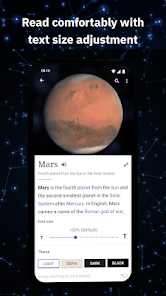
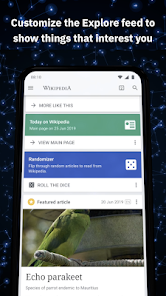
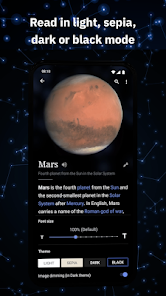
The user interface of the Wikipedia app is refreshingly straightforward. Upon opening the app, I’m greeted with a clean layout that prioritizes content over clutter. The search bar is prominently placed, making it easy to dive into any topic. I appreciate the smooth scrolling and the ability to adjust text size for comfortable reading. The feature that allows me to save articles for offline access is a game-changer, especially when I’m traveling or in areas with limited connectivity. Overall, my experience has been seamless; the app performs well without lag, and I find myself spending hours exploring various subjects without feeling fatigued.
One of the best aspects of the Wikipedia app is that it is completely free to use. There are no hidden fees or premium subscriptions, which is a breath of fresh air in a world where many apps come with a price tag. This accessibility allows anyone, regardless of their financial situation, to access a wealth of knowledge. The app is supported by donations, which I find commendable, as it keeps the platform ad-free and focused on providing information rather than profit.
Wikipedia is consistently updated with new features and improvements, which enhances the overall user experience. I’ve noticed regular updates that not only fix bugs but also introduce new functionalities, such as enhanced search capabilities and improved article suggestions. The support system is robust; if I ever encounter an issue, I can easily find help through the app’s FAQ section or community forums. The commitment to user feedback is evident, making me feel valued as a user.
As an American user, I take security and privacy seriously, and I’m pleased to report that the Wikipedia app addresses these concerns effectively. The app is available on both the App Store and Google Play, ensuring that it meets the security standards set by these platforms. There’s no requirement for personal data registration, which is a significant plus; I can use the app without creating an account or providing sensitive information.
Moreover, Wikipedia does not display ads or engage in tracking behavior, which is refreshing in today’s digital landscape. This commitment to user privacy allows me to explore topics freely without the fear of being bombarded by targeted advertisements or having my data sold to third parties. Overall, I feel secure using the Wikipedia app, knowing that my privacy is respected while I access a world of knowledge.

 Discover endless knowledge Access articles offline easily User-friendly interface design Regular updates for accuracy Explore diverse topics freely
 Limited offline access options Frequent content updates needed User-generated errors possible Navigation can be confusing Ads may disrupt user experience
 Yes, users can provide feedback or suggestions through the Wikipedia website or app, often via discussion pages.
Wikipedia does not collect personal data; however, it may log IP addresses for security and analytics purposes.
Yes, users can download articles for offline reading, allowing access without an internet connection.
Since Wikipedia is free and does not require a subscription, there is no cancellation process needed.
Wikipedia does not have a subscription model; it is entirely free for all users.
You can reach Wikipedia's support through their Help page or by visiting their official website for assistance.
Open the app, tap on the "Log in" option, and enter your username and password to access your account.
No activation is required; simply download the app and start using it immediately.
Wikipedia does not have a direct customer number; support is primarily provided through their online Help resources.













 Home
Home  Apps
Apps  Games
Games  Terms of Service
  Cookies & Privacy Policy
  Disclaimer
  Google Play
  App Store